
Tooth Infection: Symptoms and Treatment
What is a Tooth Infection?
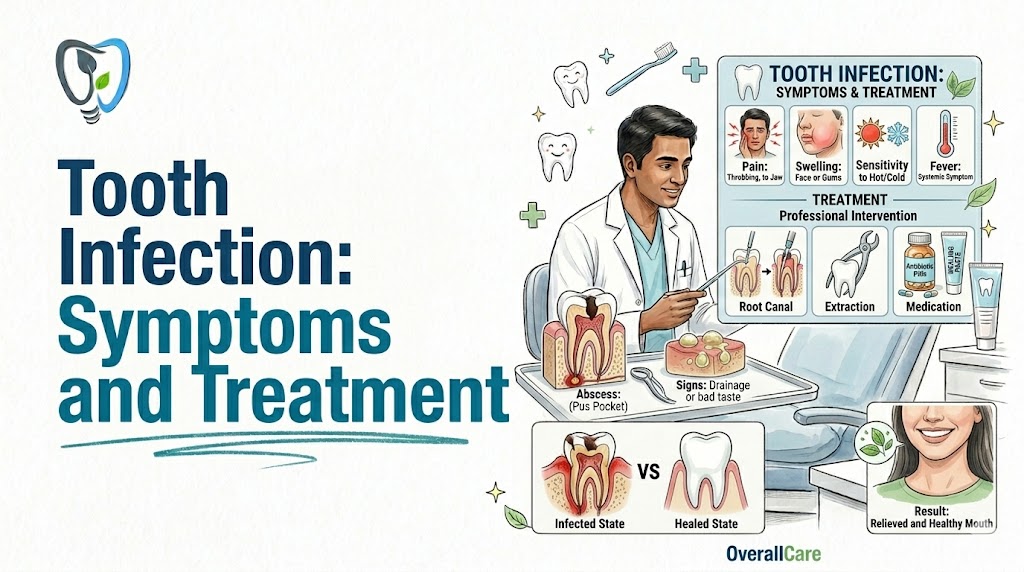
A tooth infection, also known as a dental abscess, occurs when bacteria enter the inner part of the tooth (pulp) or surrounding tissues. This leads to inflammation, pus formation, and intense pain.
In most cases, infections develop due to untreated cavities, cracked teeth, or gum disease. Once bacteria reach the inner layers, they multiply and cause infection. If not treated in time, the infection can spread to nearby tissues, jawbone, or even other parts of the body.
Many people search for:
- tooth infection symptoms
- signs of tooth abscess
- tooth infection treatment
Understanding the symptoms early can help prevent serious complications.
Common Symptoms of Tooth Infection
Severe Tooth Pain
Persistent or throbbing tooth pain is one of the most common signs of infection. The pain may worsen while chewing, biting, or even lying down. It may start as mild discomfort and gradually become severe.
Swelling in Gums or Face
Swelling around the affected tooth, gums, or even the face indicates inflammation and infection. In advanced cases, swelling can spread and cause visible facial changes.
Sensitivity to Hot and Cold
Pain while consuming hot or cold foods that lingers for a long time is a common symptom. This indicates nerve involvement inside the tooth.
Bad Taste or Bad Breath
A foul taste in the mouth or persistent bad breath can occur due to pus formation and bacterial activity inside the infected area.
Fever and General Discomfort
In severe cases, tooth infection can cause fever, fatigue, and a general feeling of illness. This indicates that the infection may be spreading.
Pus Formation
The presence of pus or discharge around the gums is a clear sign of infection. It often indicates an abscess and requires immediate dental care.
Causes of Tooth Infection
Untreated Cavities
Deep cavities allow bacteria to reach the inner layers of the tooth, leading to infection.
Cracked or Damaged Tooth
A crack or injury in the tooth provides an entry point for bacteria to infect the pulp.
Gum Disease
Infected gums can spread bacteria to the roots of teeth, causing infection.
Poor Oral Hygiene
Lack of proper brushing and flossing allows plaque and bacteria to accumulate, increasing the risk of infection.
Is Tooth Infection Serious?
Yes, a tooth infection is a serious condition and should not be ignored. If left untreated, the infection can spread to surrounding tissues, jawbone, and even other parts of the body.
Ignoring symptoms can lead to complications such as:
- Severe pain and swelling
- Difficulty in eating or speaking
- Spread of infection
- Tooth loss
Early treatment is essential to prevent these risks.
Tooth Infection Treatment Options
Antibiotics
Dentists may prescribe antibiotics to control bacterial infection and prevent it from spreading. However, antibiotics alone do not eliminate the root cause.
Root Canal Treatment
A root canal is one of the most effective treatments. It involves removing the infected pulp, cleaning the tooth, and sealing it to prevent reinfection.
This helps save the natural tooth.
Tooth Extraction
If the tooth is severely damaged and cannot be saved, removal may be necessary to stop the infection.
Drainage of Abscess
In some cases, the dentist may drain the pus to relieve pressure, reduce pain, and control infection.
Home Remedies (Temporary Relief Only)
Home remedies can help reduce discomfort temporarily but cannot cure the infection.
Salt Water Rinse
Rinsing with warm salt water helps reduce bacteria and soothe inflamed tissues.
Cold Compress
Applying a cold compress externally helps reduce swelling and numb the pain.
Pain Relief Medication
Over-the-counter medicines can provide temporary pain relief.
These remedies do not treat the infection and should not replace professional dental care.
What to Avoid If You Have a Tooth Infection
- Avoid delaying dental treatment
- Avoid chewing on the affected side
- Avoid very hot or cold foods
- Avoid self-medication without proper advice
Ignoring these precautions can worsen the condition.
When Should You See a Dentist?
You should seek immediate dental care if:
- Pain becomes severe or persistent
- Swelling spreads to the face or jaw
- You develop fever
- There is pus or discharge
- You have difficulty opening your mouth or swallowing
Consulting experienced dentists like Dr. Purva Jain or Dr. Runit Jain ensures accurate diagnosis and effective treatment.
Conclusion
A tooth infection is a serious dental condition that should never be ignored. Early detection and proper treatment can prevent complications and help save the affected tooth.
If you experience symptoms such as pain, swelling, or pus, seeking immediate dental care is essential for effective treatment and recovery.
Contact Dr Jain Dental Clinics for Tooth Infection Treatment
If you are experiencing symptoms of a tooth infection, it is important to seek professional care immediately. Dr Jain Dental Clinics is a trusted choice for patients looking for the best dentist in Bharuch for advanced dental treatment and emergency care.
Get in Touch
Phone: +91 74900 40985
Email: runit1989@gmail.com
Visit Our Clinics in Bharuch
Dr. Jain’s Dental Clinic – Samrajya Complex
116-118, Samrajya Complex,
Shravan Chokdi, Dahej Bypass Road,
Bharuch, Gujarat – 392015
Dr. Jain’s Dental Clinic – Falshruti Nagar
15-16, Falshruti Nagar, Near S.T. Depot,
Station Road, Bharuch H.O.,
Bharuch, Gujarat – 392001
Book Your Appointment
If you are searching for the best dental clinic in Bharuch or need urgent treatment for tooth infection, our experienced team is here to help. Early consultation can prevent serious complications and ensure faster recovery.
Call now to schedule your appointment and get expert dental care.
How do I know if my tooth is infected?
Symptoms include severe pain, swelling, bad taste, sensitivity, and pus formation.
Can a tooth infection go away on its own?
No, a tooth infection usually requires professional treatment and does not heal on its own.
How long can a tooth infection last?
It can worsen over time and lead to serious complications if untreated.
What is the fastest way to treat a tooth infection?
Root canal treatment or antibiotics prescribed by a dentist are the fastest and most effective options.