
Cavity Symptoms and Early Signs
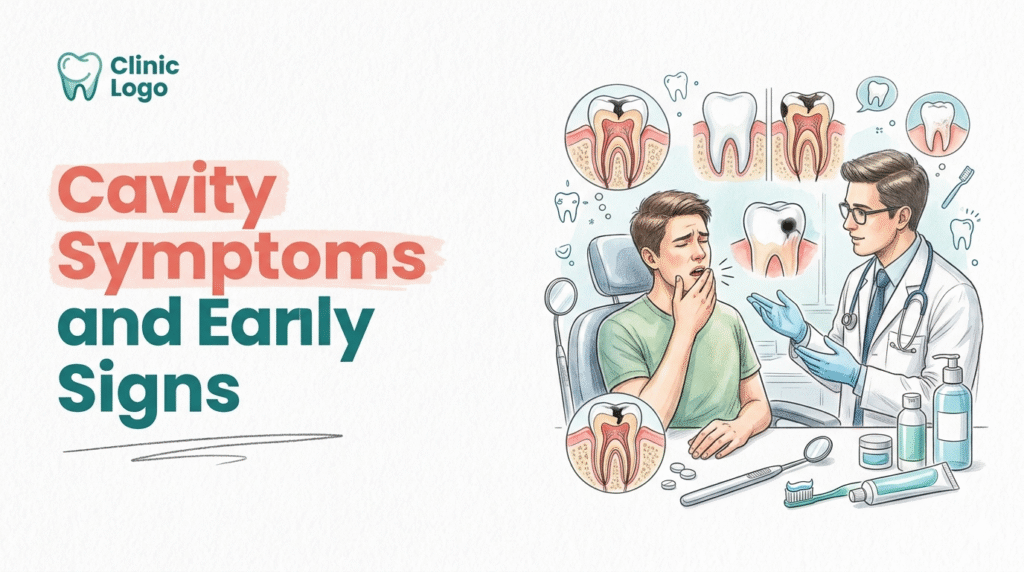
Many people do not realize they have a cavity until the pain becomes severe. However, tooth decay usually starts with small warning signs that are easy to ignore. Identifying these early symptoms can help prevent bigger dental problems and avoid complex treatments later.
Cavities develop gradually when bacteria and plaque damage the outer layer of the tooth. In the beginning, the damage may be minor, but over time it can reach deeper layers and affect the tooth nerve.
People often search for:
- early signs of cavities
- cavity symptoms
- how to know if you have a cavity
- tooth decay symptoms
Understanding these signs early can help protect your teeth and maintain better oral health.
How Does a Cavity Start?
A cavity usually begins when plaque builds up on the teeth. Bacteria in plaque produce acids that slowly weaken the enamel, which is the protective outer layer of the tooth.
At first, this damage may not cause pain. This is why many cavities remain unnoticed in the early stages. As the decay spreads deeper, symptoms gradually become more noticeable.
Poor oral hygiene, sugary foods, frequent snacking, and lack of regular dental care are some of the most common causes of cavities.
Early Signs of a Cavity
Tooth Sensitivity
One of the earliest signs of tooth decay is sensitivity to hot, cold, or sweet foods. You may notice a sudden sharp sensation that lasts for a few seconds after eating or drinking.
This happens because the enamel becomes weaker, exposing the inner part of the tooth.
White Spots on Teeth
In the very early stage of decay, white chalky spots may appear on the tooth surface. These spots indicate mineral loss in the enamel and are often the first visible sign of a cavity.
If detected early, proper dental care may help prevent further damage.
Mild Tooth Pain
A cavity may initially cause mild or occasional pain, especially while chewing food. Many people ignore this discomfort because it comes and goes.
However, recurring tooth pain should never be ignored, as it may indicate progressing decay.
Dark Spots or Holes in Teeth
As the cavity grows, brown or black spots can develop on the tooth surface. In some cases, you may notice a small visible hole or pit.
This usually means the enamel has already started breaking down.
Pain While Eating Sweet Foods
If sugary foods or drinks trigger pain or sensitivity, it may be a sign of tooth decay. Bacteria inside the cavity react strongly to sugar, increasing discomfort.
Bad Breath or Unpleasant Taste
Cavities can trap food particles and bacteria, leading to persistent bad breath or an unpleasant taste in the mouth.
Symptoms of Advanced Tooth Decay
When cavities are left untreated, symptoms become more severe.
Persistent Toothache
Pain becomes more frequent and intense as the decay reaches deeper layers of the tooth.
Swelling Around the Tooth
Infection may cause swelling in the gums surrounding the affected tooth.
Sensitivity That Lasts Longer
Pain from hot or cold foods may linger for a longer time instead of disappearing quickly.
Tooth Infection
Severe decay can eventually infect the tooth pulp and may require root canal treatment.
What Increases the Risk of Cavities?
Several daily habits increase the chances of tooth decay:
- Frequent sugary snacks and soft drinks
- Poor brushing and flossing habits
- Dry mouth
- Smoking or tobacco use
- Skipping regular dental checkups
People with poor oral hygiene are more likely to develop cavities at an earlier stage.
How to Prevent Cavities Early
Brush Properly Twice a Day
Using fluoride toothpaste helps remove plaque and strengthen enamel.
Floss Daily
Flossing removes food particles and bacteria from areas a toothbrush cannot reach.
Reduce Sugar Intake
Limiting sugary foods and drinks helps reduce acid attacks on teeth.
Visit Dentist Regularly
Regular dental checkups help identify cavities before they become serious.
Early detection often means simpler and less painful treatment.
Treatment Options for Cavities
The treatment depends on how advanced the cavity is.
Dental Fillings
Small cavities are usually treated with tooth-colored fillings.
Root Canal Treatment
If decay reaches the tooth nerve, root canal treatment may be required to save the tooth.
Dental Crown
Large cavities may weaken the tooth structure and require a crown for protection.
When Should You See a Dentist?
You should visit a dentist if you notice:
- Tooth sensitivity that keeps returning
- Dark spots or visible holes in teeth
- Pain while chewing
- Persistent toothache
- Bad breath that does not improve
Consulting experienced dentists like Dr. Purva Jain or Dr. Runit Jain can help detect cavities early and prevent serious complications.
Contact Dr Jain Dental Clinics for Cavity Treatment
If you are experiencing tooth sensitivity, tooth pain, or early signs of cavities, professional dental care can help prevent serious damage. Dr Jain Dental Clinics is a trusted choice for patients looking for the best dentist in Bharuch for cavity treatment and complete dental care.
Get in Touch
Phone: +91 74900 40985
Email: runit1989@gmail.com
Visit Our Clinics in Bharuch
Dr. Jain’s Dental Clinic – Samrajya Complex
116-118, Samrajya Complex,
Shravan Chokdi, Dahej Bypass Road,
Bharuch, Gujarat – 392015
Dr. Jain’s Dental Clinic – Falshruti Nagar
15-16, Falshruti Nagar, Near S.T. Depot,
Station Road, Bharuch H.O.,
Bharuch, Gujarat – 392001
Book Your Appointment
If you are searching for the best dental clinic in Bharuch for cavity treatment, our experienced team is here to help. Early diagnosis can prevent severe tooth damage and help maintain healthy teeth for the long term.
Can cavities heal naturally?
Very early enamel damage may improve with fluoride care, but most cavities require dental treatment.
Are cavities always painful?
No, early cavities often develop without pain, which is why regular checkups are important.
How long does it take for a cavity to form?
It can take months or even years depending on oral hygiene and eating habits.
What is the first stage of tooth decay?
The first stage usually involves white spots caused by enamel demineralization.