
Swollen Gums Treatment at Home
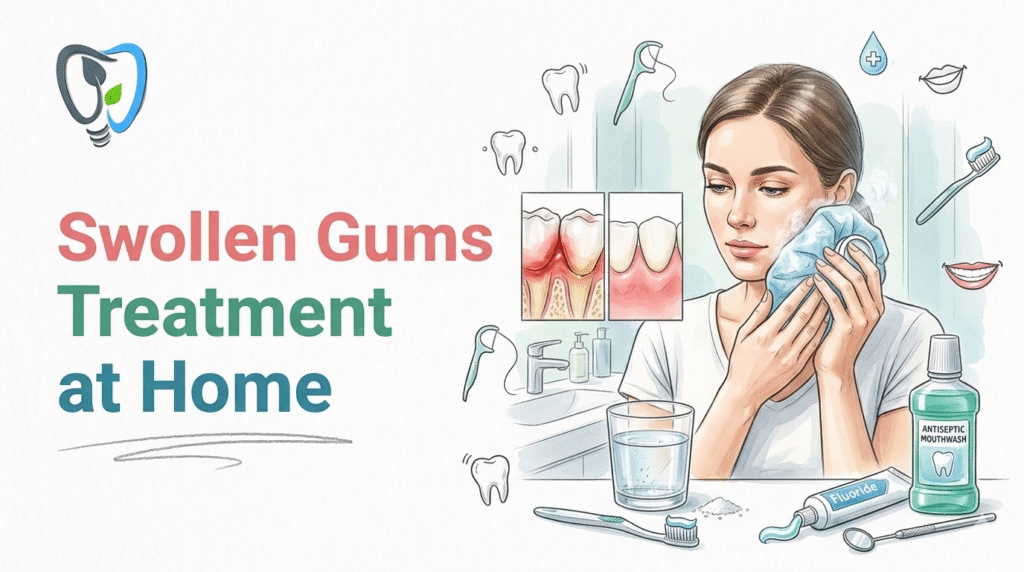
What Are Swollen Gums?
Swollen gums occur when the gum tissues become inflamed, enlarged, or tender. This condition can cause discomfort, bleeding, and difficulty while eating or brushing.
Healthy gums should appear firm and pink. If your gums look red, puffy, or feel painful, it usually indicates irritation or an underlying dental issue.
People commonly search for:
- swollen gums treatment at home
- how to reduce gum swelling
- home remedies for swollen gums
Common Causes of Swollen Gums
Poor Oral Hygiene
Plaque buildup along the gum line is one of the main reasons for gum swelling and irritation.
Gum Disease
Early gum disease causes inflammation, redness, and swelling of the gums.
Food Stuck Between Teeth
Food particles trapped between teeth can irritate the gums and lead to localized swelling.
Vitamin Deficiency
Lack of vitamins like vitamin C can weaken gums and increase the risk of swelling.
Hormonal Changes
Hormonal fluctuations can make gums more sensitive and prone to swelling.
Effective Home Remedies for Swollen Gums
Warm Salt Water Rinse
Rinse your mouth with warm salt water 2–3 times a day to reduce bacteria and soothe inflammation.
Cold Compress
Applying a cold compress on the outside of the cheek can help reduce swelling and discomfort.
Proper Brushing and Flossing
Maintain good oral hygiene to remove plaque and prevent further irritation.
Use Antibacterial Mouthwash
Helps control bacteria and promotes gum healing.
Stay Hydrated
Drinking enough water helps flush out bacteria and supports oral health.
What to Avoid When You Have Swollen Gums
- Avoid hard or crunchy foods
- Avoid spicy or acidic foods
- Avoid smoking or tobacco use
- Avoid brushing aggressively
Care Tips for Faster Recovery
Use a Soft Toothbrush
Reduces damage to sensitive gums and prevents further irritation.
Maintain a Healthy Diet
Include foods rich in vitamins and minerals to support gum health.
Keep Oral Hygiene Consistent
Regular brushing and flossing prevent worsening of the condition.
When Should You See a Dentist?
You should consult a dentist if:
- Swelling does not reduce within a few days
- Pain or bleeding increases
- You notice pus or infection
- Gum swelling keeps recurring
Consulting experts like Dr. Runit Jain or Dr. Purva Jain can help diagnose the cause and provide proper treatment.
Conclusion
Swollen gums are often caused by irritation, plaque buildup, or early gum disease. While home remedies can provide relief, identifying and treating the root cause is important for long-term oral health.
Proper care, good hygiene, and timely dental consultation can help prevent complications and keep your gums healthy.
Contact Dr Jain Dental Clinics for Gum Treatment
If you are experiencing swollen gums or gum-related issues, it is important to seek professional care. Dr Jain Dental Clinics is a trusted choice for patients looking for the best dentist in Bharuch for gum care and advanced dental treatment.
Get in Touch
Phone: +91 74900 40985
Email: runit1989@gmail.com
Visit Our Clinics in Bharuch
Dr. Jain’s Dental Clinic – Samrajya Complex
116-118, Samrajya Complex,
Shravan Chokdi, Dahej Bypass Road,
Bharuch, Gujarat – 392015
Dr. Jain’s Dental Clinic – Falshruti Nagar
15-16, Falshruti Nagar, Near S.T. Depot,
Station Road, Bharuch H.O.,
Bharuch, Gujarat – 392001
Book Your Appointment
If you are searching for the best dental clinic in Bharuch or need expert treatment for swollen gums, our experienced team is here to help. Early consultation can prevent complications and ensure effective treatment.
Call now to schedule your appointment and get professional dental care.
How long do swollen gums take to heal?
Mild swelling may improve within a few days with proper care, but severe cases require treatment.
Can swollen gums go away on their own?
Mild cases may improve, but persistent swelling indicates an underlying problem.
What is the fastest way to reduce gum swelling?
Salt water rinse, cold compress, and maintaining oral hygiene can help reduce swelling quickly.
Are swollen gums a sign of infection?
They can be a sign of infection, especially if accompanied by pain or pus.