
Tooth Extraction: Procedure and Recovery
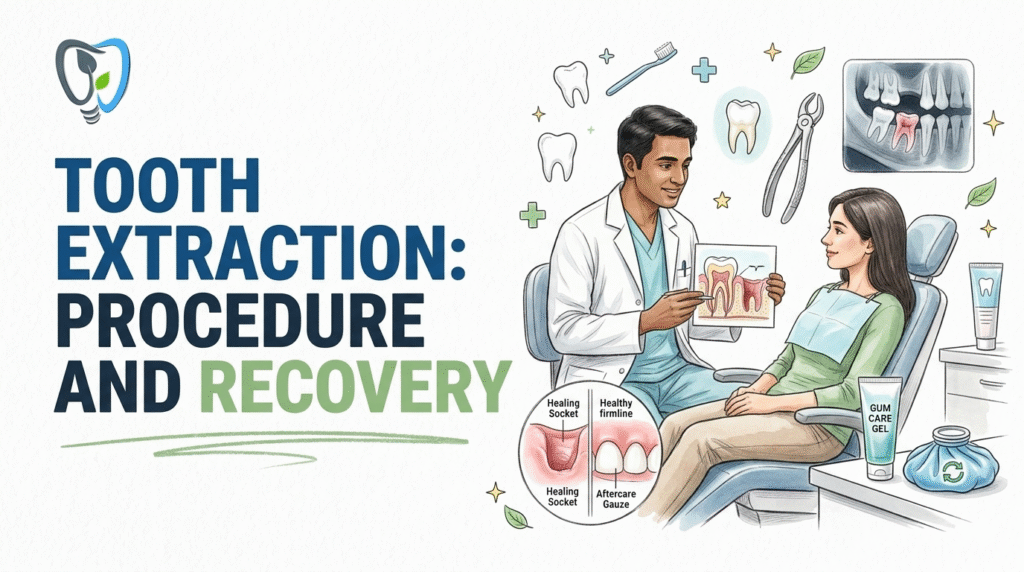
Hearing that a tooth needs to be removed can make many patients nervous. One of the most common concerns people have is about the extraction procedure and how long recovery will take.
Tooth extraction is a common dental procedure performed when a tooth is severely damaged, infected, loose, or causing complications that cannot be treated with other dental procedures.
Modern dental techniques make tooth extraction much safer, faster, and more comfortable than many people expect. Understanding the procedure and recovery process can help reduce anxiety and prepare patients for smoother healing.
What is Tooth Extraction?
Tooth extraction is the removal of a tooth from its socket in the jawbone. Dentists recommend extraction when saving the tooth is no longer possible or when the tooth is affecting surrounding teeth and oral health.
People commonly search for:
- tooth extraction procedure
- tooth removal recovery
- pain after tooth extraction
- how long does tooth extraction heal
Extraction may be simple or surgical depending on the condition and position of the tooth.
Why is Tooth Extraction Needed?
Dentists usually try to save natural teeth whenever possible. However, extraction may become necessary in certain situations.
Severe Tooth Decay
If decay damages the tooth beyond repair, extraction may be the only option.
Tooth Infection
Serious infection that cannot be treated with root canal treatment may require removal of the tooth.
Impacted Wisdom Tooth
Wisdom teeth that are trapped inside the gums or jawbone often need extraction.
Loose Teeth Due to Gum Disease
Advanced gum disease can weaken the supporting bone and make teeth loose.
Overcrowding
In some orthodontic cases, teeth may need to be removed to create space for braces or alignment treatment.
Types of Tooth Extraction
Simple Extraction
A simple extraction is performed on visible teeth using local anesthesia. The dentist loosens the tooth and removes it carefully.
This procedure is usually quick and straightforward.
Surgical Extraction
Surgical extraction is required for impacted, broken, or difficult-to-remove teeth.
The dentist may need to make a small incision in the gums to access the tooth.
Wisdom tooth removal often falls under this category.
Tooth Extraction Procedure Step-by-Step
Understanding the procedure can help reduce fear and uncertainty.
Step 1: Dental Examination and X-Ray
The dentist first examines the tooth and takes an X-ray to evaluate the roots, bone, and surrounding structures.
Step 2: Local Anesthesia
The area around the tooth is numbed to minimize pain during the procedure.
Most patients feel pressure but not sharp pain.
Step 3: Tooth Removal
The dentist gently loosens the tooth and removes it using specialized dental instruments.
For surgical extraction, a small incision may be made if needed.
Step 4: Cleaning the Area
After extraction, the socket is cleaned to remove bacteria and debris.
Step 5: Gauze Placement
A gauze pad is placed over the area to control bleeding and help clot formation.
Is Tooth Extraction Painful?
Modern tooth extraction is generally not painful because local anesthesia is used to numb the area.
Patients may feel:
- pressure
- movement
- mild pulling sensation
But severe pain during the procedure is uncommon.
Some soreness or swelling after extraction is normal and improves gradually during recovery.
What to Expect After Tooth Extraction
Recovery differs depending on the complexity of the extraction and individual healing.
Common temporary symptoms include:
- mild bleeding
- swelling
- soreness
- jaw stiffness
Most discomfort improves within a few days.
Tooth Extraction Recovery Tips
Proper aftercare is important for faster healing and preventing complications.
Bite on Gauze Properly
Keeping pressure on the gauze helps control bleeding and supports clot formation.
Avoid Spitting or Rinsing Immediately
Forceful rinsing can disturb the blood clot and delay healing.
Eat Soft Foods
Soft foods reduce pressure on the extraction area during healing.
Avoid Smoking and Tobacco
Smoking increases the risk of infection and dry socket.
Use Cold Compress
Applying a cold compress helps reduce swelling and discomfort.
Foods to Eat After Tooth Extraction
During recovery, patients should choose soft and easy-to-chew foods such as:
- yogurt
- soup
- mashed potatoes
- smoothies
- soft rice
- bananas
Avoid hard, spicy, or crunchy foods until healing improves.
Common Complications After Tooth Extraction
Most extractions heal normally, but complications can occur in some cases.
Dry Socket
Dry socket occurs when the protective blood clot becomes dislodged, exposing the bone underneath.
This can cause severe pain and delayed healing.
Infection
Improper oral care after extraction may increase the risk of infection.
Swelling and Bruising
Mild swelling is normal, especially after surgical extraction.
When Should You Contact a Dentist?
You should contact your dentist if:
- bleeding continues excessively
- pain becomes severe
- swelling worsens after several days
- fever develops
- there is pus or foul smell
Consulting experienced dentists like Dr. Runit Jain or Dr. Purva Jain helps ensure safe extraction and proper recovery guidance.
Conclusion
Tooth extraction is a common and safe dental procedure used to remove damaged, infected, or problematic teeth. Modern techniques and anesthesia help make the procedure much more comfortable than many patients expect.
Following proper aftercare instructions is essential for smooth recovery and preventing complications. Seeking timely dental care can also help avoid severe pain and infection.
Contact Dr Jain Dental Clinics for Tooth Extraction
If you are experiencing severe tooth pain, infection, or wisdom tooth problems, professional dental care is important. Dr Jain Dental Clinics is a trusted choice for patients searching for the best dentist in Bharuch for safe tooth extraction and advanced dental treatment.
Get in Touch
Phone: +91 74900 40985
Email: runit1989@gmail.com
Visit Our Clinics in Bharuch
Dr. Jain’s Dental Clinic – Samrajya Complex
116-118, Samrajya Complex,
Shravan Chokdi, Dahej Bypass Road,
Bharuch, Gujarat – 392015
Dr. Jain’s Dental Clinic – Falshruti Nagar
15-16, Falshruti Nagar, Near S.T. Depot,
Station Road, Bharuch H.O.,
Bharuch, Gujarat – 392001
Book Your Appointment
If you are searching for the best dental clinic in Bharuch for tooth extraction or wisdom tooth removal, our experienced team is here to help. Early treatment can prevent severe infection, swelling, and long-term dental complications.
How long does tooth extraction recovery take?
Most patients recover within a few days, while surgical extractions may take longer
Can I brush my teeth after extraction?
Yes, but avoid brushing directly over the extraction site initially.
Is swelling normal after tooth extraction?
Mild swelling is common and usually improves within 2–3 days.
What is dry socket?
Dry socket is a painful condition caused when the blood clot at the extraction site is lost too early.