
What is Root Canal Treatment? (RCT Guide)
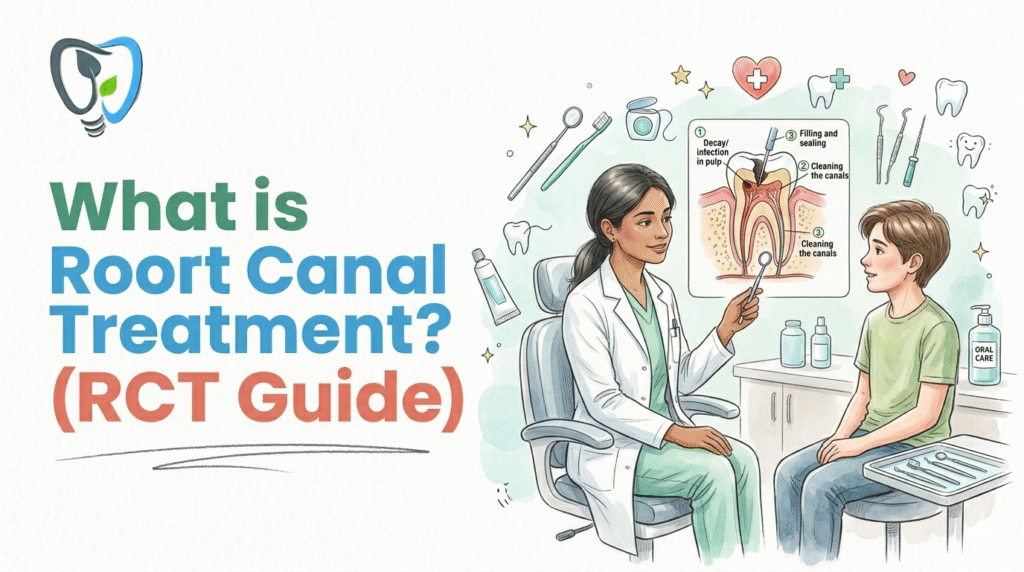
A root canal treatment, commonly called RCT, is a dental procedure used to save a severely infected or damaged tooth. It involves removing the infected pulp (soft tissue inside the tooth), cleaning the root canals, and sealing the tooth to prevent reinfection.
Root canal treatment helps relieve pain, stop infection, and preserve your natural tooth instead of removing it.
Why is Root Canal Treatment Needed?
Inside every tooth is a soft tissue called pulp, which contains nerves and blood vessels. When this pulp becomes infected due to deep decay, cracks, injury, or repeated dental procedures, severe pain and infection can occur.
RCT is needed when the infection reaches the inner layers of the tooth and cannot heal naturally.
Without treatment, the infection may spread and lead to:
- Severe tooth pain
- Swelling and pus formation
- Tooth abscess
- Tooth loss
Common Signs You May Need Root Canal Treatment
Persistent Tooth Pain
Continuous or throbbing tooth pain is one of the most common symptoms.
Sensitivity to Hot and Cold
Pain that lingers after eating hot or cold foods may indicate nerve damage.
Swollen Gums
Swelling or tenderness around the affected tooth can signal infection.
Pain While Chewing
Discomfort while biting or chewing often occurs when the tooth nerve is inflamed.
Darkening of Tooth
An infected tooth may appear darker than surrounding teeth.
Pus or Bad Taste
Pus discharge or a bad taste in the mouth may indicate a dental abscess.
Step-by-Step Root Canal Treatment Procedure
Dental Examination and X-Ray
The dentist first examines the tooth and takes an X-ray to identify the extent of infection.
Local Anesthesia
The area around the tooth is numbed to ensure a comfortable and painless procedure.
Removing the Infected Pulp
A small opening is made in the tooth to remove the infected pulp tissue.
Cleaning the Root Canals
The canals inside the tooth are cleaned, disinfected, and shaped properly.
Filling and Sealing
The cleaned canals are filled with a special material to prevent reinfection.
Dental Crown Placement
In many cases, a crown is placed on the tooth to restore strength and function.
Is Root Canal Treatment Painful?
Modern root canal treatment is usually not painful because it is performed under local anesthesia. Most patients feel relief from pain after the procedure because the infected tissue is removed.
Many people fear RCT because of outdated myths, but modern dental technology makes the treatment much more comfortable than before.
How Long Does Root Canal Treatment Take?
The duration depends on the severity of infection and the condition of the tooth.
- Simple cases may require 1 visit
- Complex infections may require 2–3 visits
Each session usually lasts between 30 to 90 minutes.
Benefits of Root Canal Treatment
Saves Natural Tooth
RCT helps preserve your original tooth instead of extracting it.
Relieves Pain
Removing the infected pulp eliminates severe tooth pain and discomfort.
Prevents Spread of Infection
Treatment stops bacteria from spreading to nearby teeth and gums.
Restores Chewing Function
After restoration, the tooth functions normally again.
What to Avoid After Root Canal Treatment
- Avoid chewing hard foods immediately after treatment
- Avoid delaying crown placement if recommended
- Maintain proper oral hygiene
- Avoid ignoring follow-up visits
Following proper care helps ensure long-term success.
Root Canal Treatment vs Tooth Extraction
Many patients wonder whether they should save the tooth or remove it.
Root Canal Treatment
- Saves the natural tooth
- Maintains chewing ability
- Prevents shifting of nearby teeth
Tooth Extraction
- Removes the tooth completely
- May require replacement like implant or bridge later
In most cases, saving the natural tooth with RCT is considered the better option.
When Should You See a Dentist?
You should consult a dentist if you experience:
- Severe tooth pain
- Swelling in gums or face
- Tooth sensitivity that persists
- Pain while chewing
- Signs of tooth infection
Consulting experienced dentists like Dr. Purva Jain or Dr. Runit Jain can help diagnose the problem early and provide effective root canal treatment.
Conclusion
Root canal treatment is an effective way to save an infected or damaged tooth while relieving pain and preventing complications. Modern RCT procedures are safe, comfortable, and highly successful.
Early treatment can help preserve your natural tooth and avoid more serious dental problems in the future.
Contact Dr Jain Dental Clinics for Root Canal Treatment
If you are experiencing severe tooth pain or signs of tooth infection, professional care is important. Dr Jain Dental Clinics is a trusted choice for patients looking for the best dentist in Bharuch for root canal treatment and advanced dental care.
Get in Touch
Phone: +91 74900 40985
Email: runit1989@gmail.com
Visit Our Clinics in Bharuch
Dr. Jain’s Dental Clinic – Samrajya Complex
116-118, Samrajya Complex,
Shravan Chokdi, Dahej Bypass Road,
Bharuch, Gujarat – 392015
Dr. Jain’s Dental Clinic – Falshruti Nagar
15-16, Falshruti Nagar, Near S.T. Depot,
Station Road, Bharuch H.O.,
Bharuch, Gujarat – 392001
Book Your Appointment
If you are searching for the best dental clinic in Bharuch for root canal treatment, our experienced team is here to help. Early treatment can save your tooth and provide long-term relief from pain.
What is the purpose of root canal treatment?
The purpose is to remove infection and save the natural tooth.
Can root canal treatment fail?
Although highly successful, reinfection may occur if proper care is not followed.
Is RCT safe?
es, root canal treatment is a safe and common dental procedure.
How long does a root canal treated tooth last?
With proper care and crown protection, the tooth can last many years.